Public Lectures
What Makes Silicon Valley Tick?
|
Speaker : |
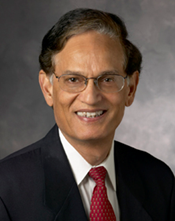
Professor Krishna Saraswat
Rickey/Nielsen Chair Professor
School of Engineering
Stanford University
|
|
Date : | 21 June 2012
|
|
Time : | 6.30 pm
|
|
Venue : | Lecture Theater (LT 5)
|
|
NUScast: | 
|
|
SYNOPSIS
What are the secrets of the success of Silicon Valley? It accounted for about 12% of all new U.S. patents and 50% of all new patents coming from California in 2009. Silicon Valley per-capita income is much higher than U.S. and California averages. But so is the cost of living. How can Silicon Valley sustain such a high cost of living? Silicon Valley thrives on an innovation-based entrepreneurial economy. It is a robust engine for new company creation. The necessary elements of an innovation-based, entrepreneurial economy are dynamic coming together of people, ideas, capital, and infrastructure. Well-known characteristics of Silicon Valley are result-oriented and risk-taking social values, highly-educated and mobile workforce, R&D activities in many technology areas, concentration of venture investors, fascination with and flexibility to reinvent itself around “the next new thing”, strong supporting human infrastructure (lawyers, accountants, technology and marketing consultants, executive search firms, etc.), and last but most importantly, a very strong industry friendly Stanford University. Stanford did not create Silicon Valley but has been an important part of the system. Stanford’s relationships with industry encourage innovation for real products, collaboration on pre-competitive technology and human networking. The evolution of the Silicon Valley system shows the importance of young people and the importance of existing companies allowing a fluid labor market and doing business with start-up companies. This talk will focus on these aspects of Silicon Valley as well as resulting innovations.
|
SPEAKER’S BIOGRAPHY
Professor Krishna Saraswat received his Ph.D. in Electrical Engineering from Stanford University in 1974. He is Rickey/Nielsen Chair Professor in the School of Engineering, Professor of Electrical Engineering and by courtesy Professor of Materials Science & Engineering at Stanford University. He is currently a visiting professor at the Department of Electrical & Computer Engineering, NUS. His research interests are in new and innovative materials, structures, and process technology of silicon, germanium and III-V devices, and interconnects for VLSI and nanoelectronics. He has graduated more than 75 doctoral students and has authored or co-authored over 650 technical papers. He is a Fellow of the IEEE. He received the Thomas Callinan Award from The Electrochemical Society in 2000 for his contributions to dielectric science and technology, the 2004 IEEE Andrew Grove Award for seminal contributions to silicon process technology, the Inventor Recognition Award from MARCO/FCRP in 2007, the Technovisionary Award from the India Semiconductor Association in 2007, and the SIA Researcher of the Year Award in 2012. He is listed by ISI as one of the 250 Highly Cited Authors in his field.
|
|

|